
Maryland's Court-Level Clerk Structure
Maryland does not split one court's civil and criminal files between a county clerk and district clerk. Custody follows the court level. Each county and Baltimore City elects a Clerk of the Circuit Court for a four-year term. District Court clerks are Maryland Judiciary employees assigned to statewide District Court locations. The Register of Wills is the operational probate custodian, and appellate clerks maintain their courts' briefs, extracts, orders, and opinions.
This distinction matters because a broad name search can show both Circuit and District matters. The clerk at the court of filing has the full case file, recordings, archived paper, and certified judgments. Case Search is a public summary, not a universal anonymous document repository. EstateSearch performs a similar index role for probate.
The Maryland Attorney General publishes open-government guidance for agency records.
Judicial case records use Maryland Rules 16-901 through 16-914, so a general agency request cannot override a seal or court access rule.
Maryland Circuit Court Clerks
The Clerk of the Circuit Court receives filings, assigns case numbers, maintains the docket and official file, issues process, collects authorized costs and fines, and supplies plain, certified, or exemplified copies. Circuit custody covers felony and serious criminal cases, jury matters, major civil claims, divorce, custody, support, juvenile and adoption cases, guardianship, and appeals from lower courts. The office also issues marriage licenses, records deeds and land instruments, administers oaths and licenses, and keeps notice records.
- Felony, jury, and other Circuit criminal files
- Major civil judgments and filed civil documents
- Divorce, custody, support, juvenile, and adoption records, subject to restrictions
- Marriage licenses, deeds, land instruments, and licenses
- Certified and exemplified copies of Circuit Court records
The Maryland Circuit Court directory links local courts and clerk offices. Pair an online result with its court location and case number before requesting a copy.
Maryland District Court Clerks
District Court clerks maintain records at the location where the case was heard. Those files include traffic and boating matters, landlord-tenant, small and limited civil claims, replevin, misdemeanors, specified felonies, preliminary criminal proceedings, and peace or protective orders. District clerks are not elected county officers, yet the local District location remains the custodian. Staff can confirm whether an old file is onsite, archived, or available through a courthouse kiosk.
- Traffic citations and related court dispositions
- Misdemeanor and preliminary criminal records
- Landlord-tenant, replevin, and limited civil cases
- Peace and protective-order files, with required access limits
District Court has no jury trials. A jury demand or later indictment can move a matter into Circuit Court, so follow docket transfer entries and contact both levels when the case path requires it.
Maryland Clerk Records and Duties
Maryland's unified-within-level model means one clerk office holds all case categories assigned to that court. Probate is the key third path because the Register of Wills, not either trial clerk, maintains the estate file.
| Record / Case Type | Correct Maryland Custodian | First Online Route |
|---|---|---|
| Felony and jury case | Clerk of the Circuit Court | Case Search summary |
| Traffic or misdemeanor case | District Court clerk | Case Search summary |
| Major civil or family case | Clerk of the Circuit Court | Case Search summary |
| Limited civil or rent case | District Court clerk | Case Search summary |
| Probate estate | Register of Wills | EstateSearch index |
| Marriage license or deed | Clerk of the Circuit Court | Local office route |
A transfer between Maryland trial levels can create two related records without changing this custody rule. A felony may begin with a District Court charging document and initial hearing, then continue under a Circuit Court indictment number. A civil party may appeal from District Court to Circuit Court, and a jury demand can also shift the forum. Requesters should read the transfer, appeal, or indictment entries instead of assuming one clerk copied the entire earlier file into the later case. Ask each Maryland clerk for the documents filed at that level, and provide both case numbers when known. For probate, even when an Orphans' Court judge enters an order, the local Register of Wills remains the practical starting point for the estate docket, will, inventory, account, and certified copies.
What Maryland Court Clerks Do
Maryland clerks preserve the official record while carrying out filing and access rules. They can explain procedure, quote copy costs, identify a file location, and certify a filed document. They cannot choose a legal strategy, decide whether someone qualifies for expungement, or disregard a sealing order. Public access is favored under Maryland Rule 16-902, subject to the Constitution, statutes, rules, case law, and court orders.
- Accept filings, assign numbers, and maintain dockets
- Issue summonses, subpoenas, writs, and other process
- Collect and receipt filing costs, fines, and charges
- Provide public inspection and apply restrictions or redactions
- Issue plain, certified, and exemplified copies
- Process MDEC filings and role-based record access
The Maryland Public Information Act inspection right applies to public agency records, while judicial files use the Judiciary's specific rules.
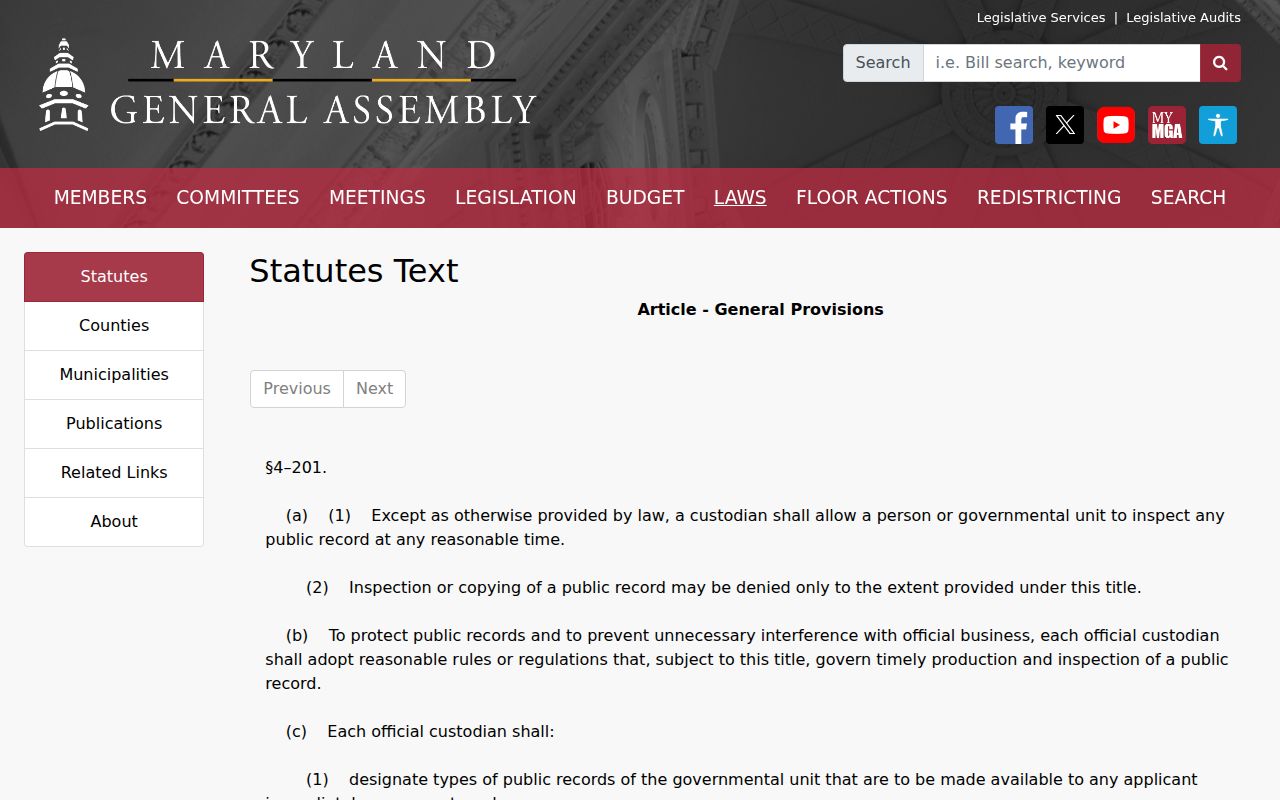
A judicial case-file request belongs with its clerk, not a statewide agency merely because Case Search is statewide.
Request Maryland Certified Copies
A certified copy bears the clerk's official authentication and may be required by another court, agency, bank, or title examiner. Exemplification supplies a higher level of authentication for some out-of-state uses. Ask the receiving body which form it needs before paying. Inspection may be free, but copying, certification, retrieval, and substantial staff work can carry charges.
- Search Case Search or EstateSearch, then note the exact court, jurisdiction, case or estate number, and document title.
- Use the Maryland jurisdiction directory to reach the Circuit clerk, District location, or Register.
- Call first for an old file. Confirm page count, copy type, payment, delivery, and identification requirements.
- Submit a focused counter or mail request with contact details, exact filing, copy quantity, and cost cap.
- Check the seal and certification when received. Preserve certified dispositions that may later leave public display.
Maryland Records Request Fields
Maryland has no single universal trial-court copy form. A precise letter reduces research time and avoids paying for papers that do not answer the request.
| Field | Required | Notes |
|---|---|---|
| Case number and court | If known | Fastest file identifier |
| Caption or party names | Yes | Give full names and variants |
| Filing or hearing date | Yes | Narrows a name-only search |
| Exact document | Yes | Such as final judgment or indictment |
| Copy type and quantity | Yes | Plain, certified, or exemplified |
| Contact and return address | Yes | Include phone or email |
| Cost cap and access authority | When relevant | State a maximum and restricted-access basis |
Maryland Clerk Copy Fees
Maryland schedules vary by record and action. The Circuit figures below are representative and should be confirmed against the current official schedule before payment. Judicial-record inspection requiring less than two employee hours generally has no access labor charge under the Judiciary FAQ, but copies and authorized charges still apply.
| Item | Amount |
|---|---|
| Case Search or EstateSearch summary | $0 |
| Circuit plain copy, representative | $0.50 per page |
| Circuit certification, representative | $5 plus copies |
| Circuit exemplification, representative | $10 plus copies |
| Register plain copy | $0.50 per page |
| Register certified copy | $0.50 per page plus $2 |
Maryland Clerk Access Channels
Start online, but choose the channel that matches the record. Maryland offers several routes instead of one all-purpose request form.
- Case Search for public Circuit and District summaries
- Courthouse public access for eligible electronic documents unavailable to anonymous remote users
- EstateSearch for probate indexing before contacting a Register
Phone contact can confirm location, pages, payment, and mailing terms. In-person inspection can reach public kiosk material. Mail works best when it names the exact filing and follows that clerk's return method.
Maryland MDEC and Mail Access
Maryland Electronic Courts uses Odyssey File & Serve for filings governed by Title 20 and rollout rules. Public Case Search, justice-partner Secure Case Search, courthouse Public Portal Access, and Judiciary Record Search for registered attorneys or authenticated parties serve different users. A clerk may reject a deficient filing, and selecting a fee-waiver option does not grant the waiver. Older or reopened files may remain paper or be scanned at court discretion.
The Maryland Public Access Ombudsman offers a dispute process for agency PIA matters through its official office.
The Ombudsman does not overrule a judicial seal. Court-file disputes must follow the applicable judicial-record rule and court process.
Find Any Maryland Court Clerk
Use the directory of all 24 Maryland jurisdictions to reach the correct Circuit clerk, District Court location, or Register of Wills. Search the statewide index first, then give the local custodian its own court name and case number. If an entry is missing, ask whether the record is on paper, microfilm, in an archive, at a restricted MDEC access level, or held by another office.
When access is limited, request the public docket and segregable portions, then ask for the rule, statute, or order controlling the rest. A party or authorized requester should identify that status. Narrow requests, a preferred electronic format, and a cost cap usually produce a clearer estimate and fewer unnecessary pages.