
What Maryland Court Dockets Record
A docket is the court’s event ledger. It can show when a complaint or charging paper was filed, process issued, service returned, counsel appeared, a motion arrived, a hearing was set, an order entered, judgment issued, or an appeal began. The docket can identify a document without displaying its PDF. Maryland Circuit and District clerks maintain trial dockets, while appellate clerks maintain petitions, briefs, orders, opinions, and mandate events.
Maryland has no ordinary municipal or justice-court layer. District Court is one statewide court with local locations and no juries. It keeps traffic, rent, small and limited civil, misdemeanor, specified felony, and preliminary criminal dockets. Circuit Court keeps jury, serious criminal, major civil, divorce, juvenile, and lower-court appeal dockets. Orphans’ Court and Register of Wills probate events are searched through EstateSearch.
Find Maryland Court Dockets Online
Maryland Judiciary Case Search and Record Portal covers every Circuit and District case-management system plus modern appellate matters. Supreme Court records begin online with term year 2015 and Appellate Court records with term year 2016. Historical depth varies with local automation. Search results update after clerk entry, often quickly, but the docket remains selected public metadata.
- Acknowledge the terms and choose name or case-number search.
- Select court, case type, county, and date filters as useful.
- Enter the name as filed or preserve punctuation in the case number.
- Open the match and read entries in date order.
- Use the Maryland directory to contact the filing clerk for documents.
The 2026 integrated portal retains anonymous summary access while authenticated parties and attorneys can receive role-based access. A courthouse kiosk can expose public MDEC documents hidden from anonymous remote users. Search failure can reflect old paper, spelling, remote-display limits, shielding, or the wrong court.
Read Maryland Court Docket Entries
Each line marks an action, not necessarily a final result. Filing date differs from hearing date, and hearing date differs from disposition date. A postponement changes the schedule but decides nothing. Read the entire Maryland docket and confirm the latest signed order before stating an outcome.
| Field | What It Shows |
|---|---|
| Entry Date | Date the clerk recorded the filing, event, or order. |
| Event Type | Motion, service, hearing, trial, judgment, sentence, appeal, or mandate. |
| Filing Party | The party or lawyer who submitted a motion, response, or notice. |
| Event Text | Short description that may include result, next date, judge, or location. |
| Document Access | A listing does not promise an anonymous PDF; use kiosk or clerk. |
| Case Status | Open, pending, closed, disposed, stayed, transferred, reopened, or appealed. |
The official MDEC public-access explanation shows how courthouse and role-based document access differ.
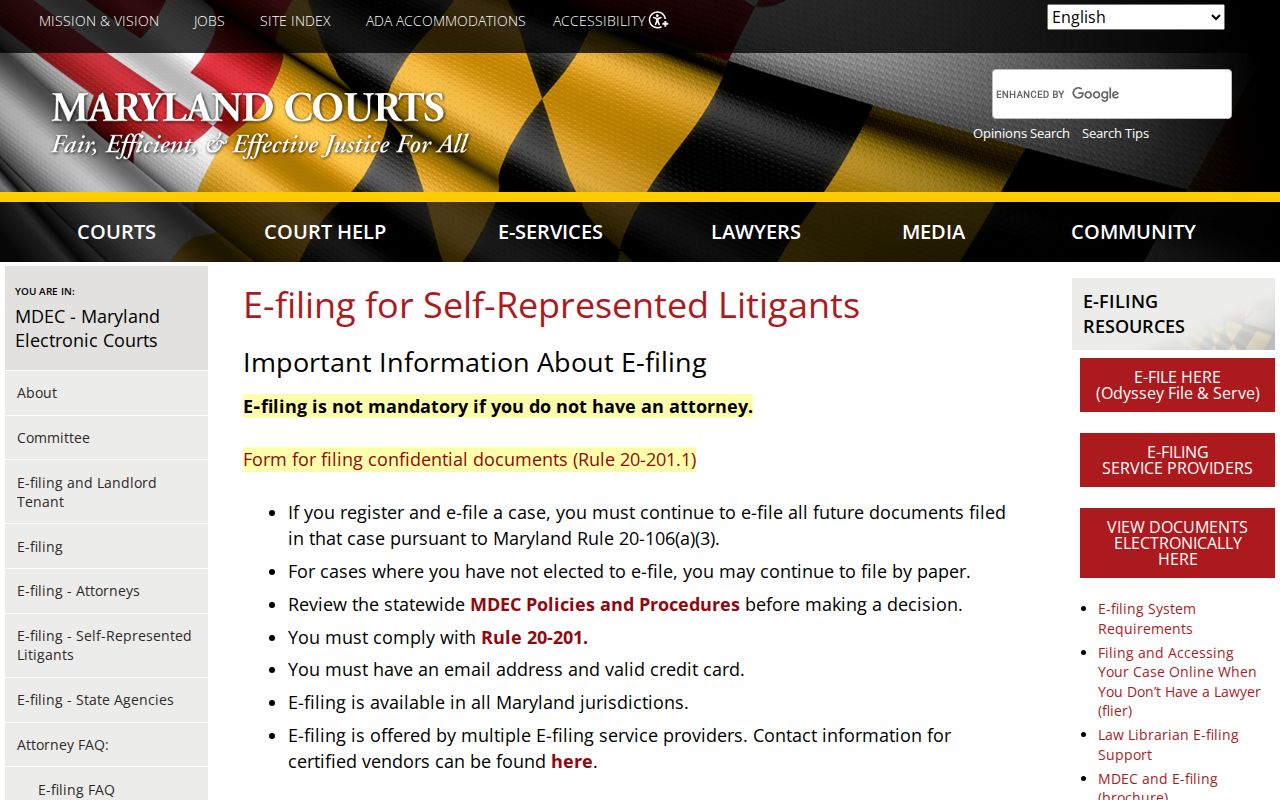
A Maryland docket entry can be visible while its filed document requires a kiosk, login, or clerk request.
Maryland Courts With Online Dockets
Case Search carries Circuit and District docket data statewide. It also covers modern Supreme Court petitions, appeals, attorney-discipline matters, Appellate Court appeals, and applications for leave to appeal. Probate is separate through EstateSearch. Federal cases use PACER. Pre-automation files, recordings, transcripts, sealed matters, and complete exhibits require the relevant clerk.
- District Court dockets cover traffic, rent, limited civil, misdemeanor, and preliminary criminal matters.
- Circuit Court dockets cover felonies, jury cases, major civil matters, family cases, and lower-court appeals.
- Appellate dockets cover petitions, briefs, argument, opinions, orders, and mandates within online date ranges.
- Probate estate dockets use the statewide Register of Wills EstateSearch index.
The Maryland Electronic Courts resource documents statewide case management.
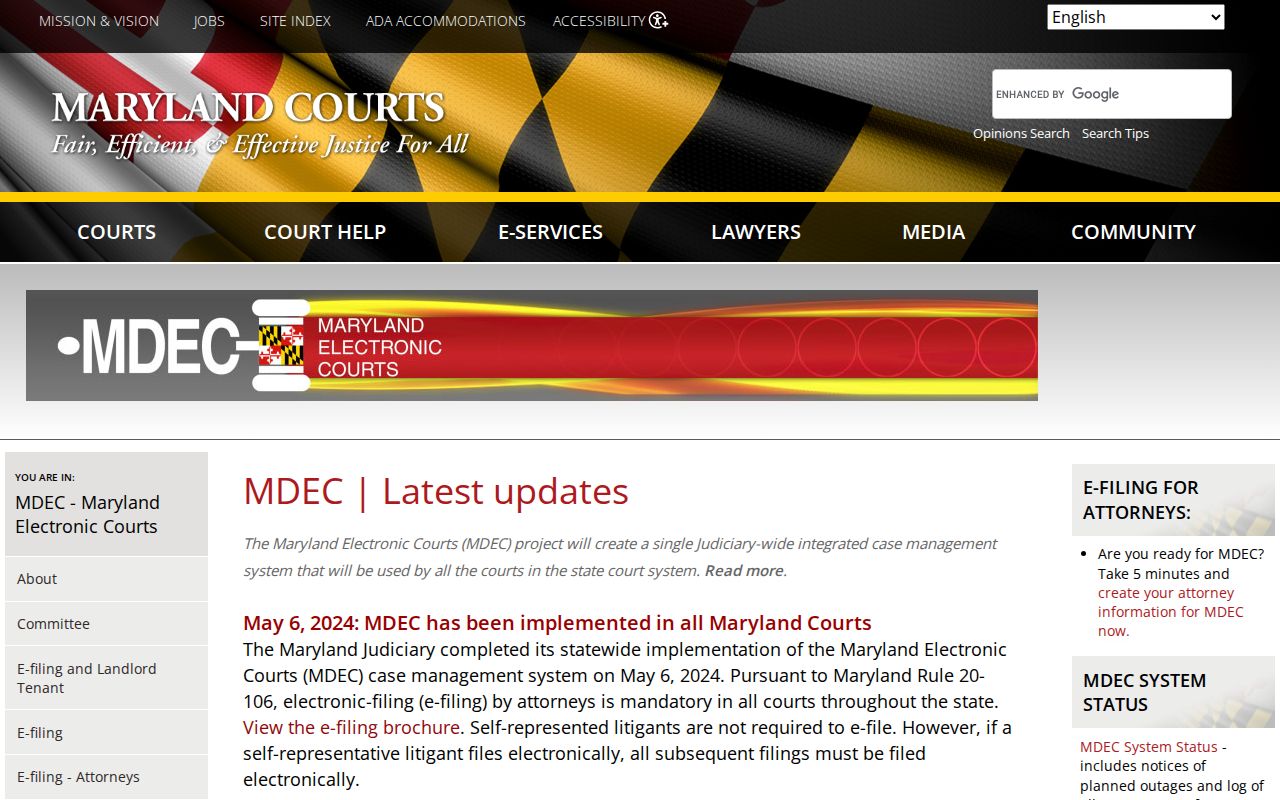
MDEC joins filing and case management, but it does not make restricted records or every public pleading an anonymous download.
Maryland Docket Versus Case File
A Maryland docket is a chronological index. The full file contains pleadings, charging papers, motions, exhibits, signed orders, transcripts, and recordings behind those entries. Case Search is free, while the file may require courthouse inspection, a written request, archive retrieval, or copy and certification fees. A certified disposition or judgment has formal value that a portal printout does not.
| Docket | Full Case Record | |
|---|---|---|
| Format | Dated event list and status data | Filed documents and court media |
| Access | Often free through Case Search | Kiosk, authenticated access, or clerk |
| Use | Track progress and locate the case | Review proof, terms, and signed rulings |
| Certification | Portal print is not certified | Clerk can certify selected documents |
Decode Maryland Docket Language
Disposition means the recorded result. Nolle prosequi means the State declined further prosecution at that time. Stet means an inactive criminal docket that can be reopened under its conditions. PBJ means probation before judgment, a Maryland outcome distinct from both an entered conviction and dismissal. A continuance only moves an event. A mandate concludes appellate review and directs the lower court.
Read criminal dockets count by count. One charge can be guilty while another is dismissed or merged for sentencing. In civil matters, judgment may be followed by garnishment, lien, satisfaction, appeal, or reopening. “Closed” does not explain every claim or count. Compare the last entries with the disposition fields and obtain the signed order when exact effect matters.
- De novo
- A new Circuit Court trial on a qualifying lower-court appeal.
- On the record
- Review based on the existing record rather than a new trial.
- Mandate
- The appellate court’s formal direction concluding review.
- Satisfaction
- An entry that a judgment obligation was paid or resolved.
Maryland Docket Access Levels
MDEC uses separate products. Public Case Search supplies summaries. Secure Case Search serves justice partners. Courthouse Public Portal Access permits inspection of public electronic documents. Judiciary Record Search or JPortal gives registered attorneys and qualifying parties enhanced access. Old or reopened files may remain paper or be scanned at court discretion.
The official four-portal explanation shows these roles.
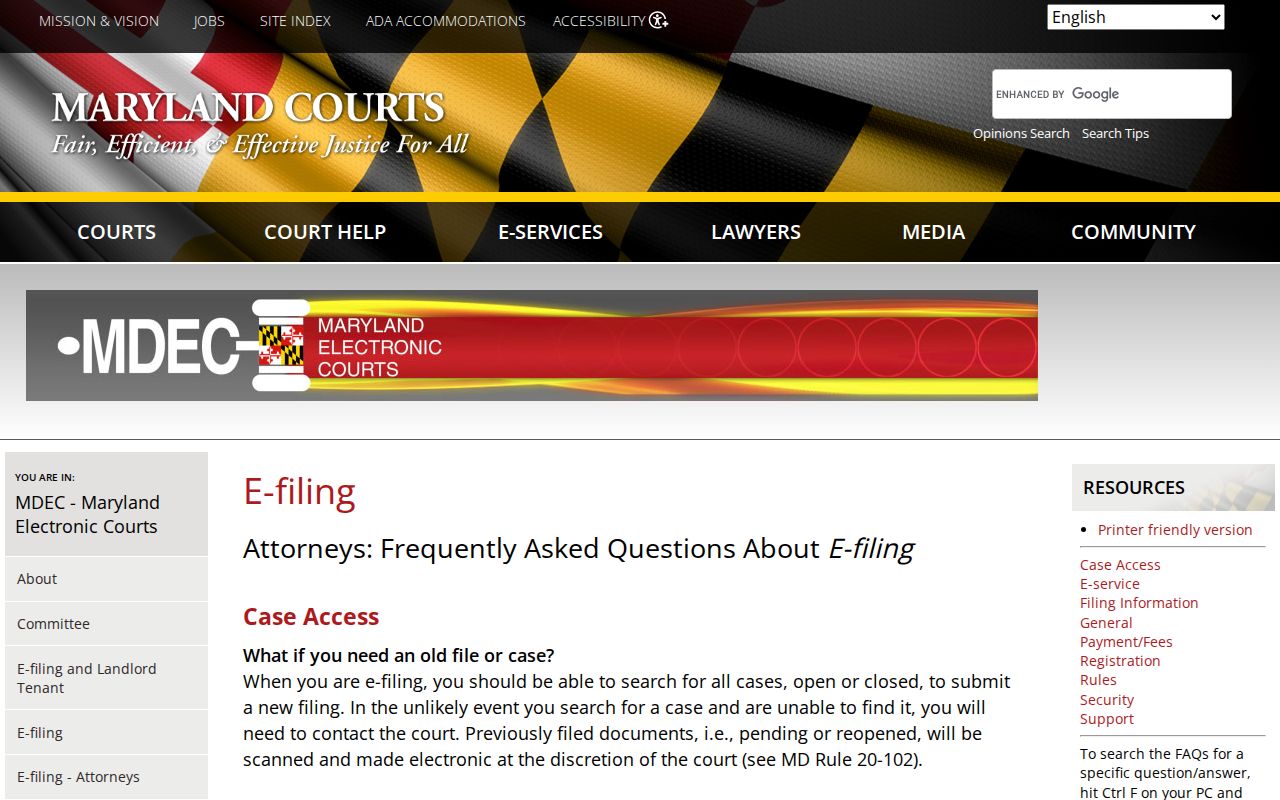
Choosing the proper level prevents an anonymous Maryland docket search from being mistaken for a complete file inspection.
The JPortal resource also documents approved restricted access.
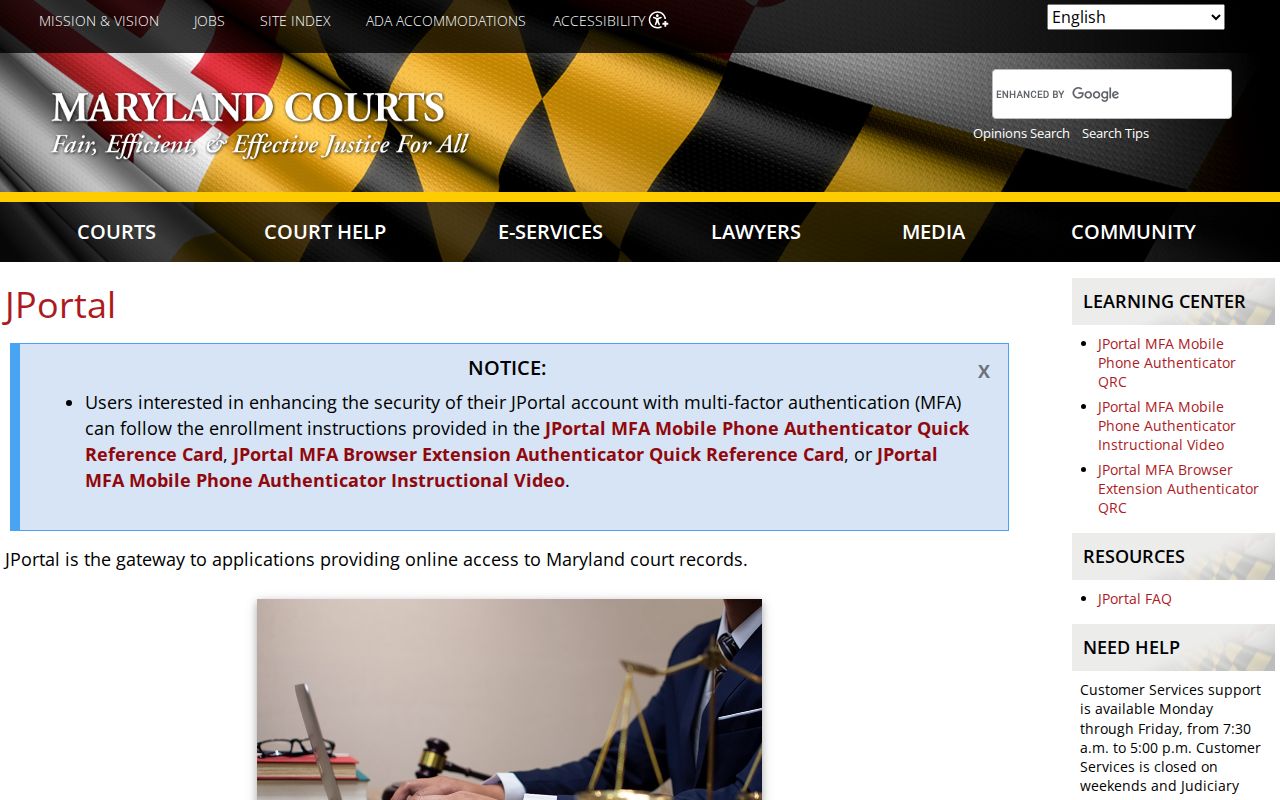
Role-based access remains subject to Maryland rules, authentication, and the user’s approved connection to the case.
Confirm Maryland Hearing Dates
A future docket entry can change. Postponement requests are not granted merely because they were filed, and a later order controls. Check the docket again near the date and contact the clerk when attendance, room, remote format, or a last-minute change matters. Court staff can confirm entries but cannot interpret legal strategy.
For older cases, ask whether the docket lives on paper, microfilm, or archive storage. Give the number, caption, approximate year, and precise entry needed. Inspection is generally free, while copies and substantial retrieval work may cost money. Ask for a written estimate and set a cost limit before broad work begins.
Federal Dockets in Maryland
Federal District of Maryland and Bankruptcy Court files do not appear in Maryland Case Search. Federal appellate matters go to the Fourth Circuit. The official PACER system provides federal docket access after registration and may charge usage fees.
Use PACER only for federal dockets; use Case Search and Maryland clerks for state cases.
Get Complete Maryland Court Dockets
Use the directory of all 24 jurisdictions to reach the clerk shown in Case Search. Circuit clerks hold serious criminal, jury, major civil, family, and appeal files. District clerks hold traffic, rent, limited civil, misdemeanor, and preliminary criminal files. Ask for a docket sheet, then name any pleading, order, audio recording, or certified disposition needed.
A precise request includes requester contact data, court, location, case number, caption, requested entries or documents, date range, copy type, delivery preference, number of copies, and maximum cost. When access is denied or redacted, ask whether only one document or field is restricted and request the remaining public docket and segregable portions.
Maryland docket timing deserves care. Case Search can update almost immediately after clerk entry, yet that does not mean every event appears at the instant it occurs. Staff must first receive and enter the filing or order. A newly filed motion may be absent, a judge may rule before the signed order is entered, and an appeal can create a second docket. Preserve the retrieval date and check again when a current deadline, hearing, release event, or case status matters.
Remote disappearance has several possible causes. A favorable criminal charge may be omitted under current display law. A stet charge can leave remote display after three years. A closed minor traffic case moves to a history database after 36 months. A sealed, shielded, expunged, juvenile, adoption, or CINA matter follows separate access rules. Old records can predate automation. Only the filing clerk can distinguish these paths and state whether a public courthouse docket or authorized party-access route remains available.
Case numbers also carry useful clues, but Maryland formats vary. A traffic citation can become the District Court case identifier. Circuit systems may encode the jurisdiction, sequence, and case type. Appellate numbers end with a term year that runs from September through August. Copy every character exactly. A search that silently drops punctuation or uses a calendar year instead of the displayed term can miss the correct Maryland docket. When related District and Circuit cases exist, record both numbers rather than assuming one replaced all history in the other.
Civil researchers should follow events beyond the first judgment. Service, judgment, garnishment, lien, satisfaction, reopening, and appeal entries answer different questions. Family dockets may display a public caption and order events while withholding tax returns, financial statements, custody reports, and medical material. Criminal researchers should read plea and disposition per count, then review sentencing and any probation-violation or appeal events. In every category, the docket is a map to the file. It is not a substitute for the signed Maryland order that defines the parties’ rights.
Note: A missing online docket may still be public at the Maryland courthouse, especially for older or remotely limited records.