
Maryland Criminal Court Case Files
A criminal court file begins when an accusation is filed. It differs from the agency booking record and from a compiled criminal history. Maryland District Court clerks keep misdemeanor, specified felony, commissioner, preliminary-hearing, and release records. Circuit Court clerks keep indictments, serious felony prosecutions, jury matters, and cases transferred after a jury demand. One incident can therefore produce linked District and Circuit numbers.
The file can include a statement of charges, complaint, summons or warrant return, charging instrument, bail review, counsel appearance, motions, plea, verdict, disposition, sentence, probation, and appeal. Discovery is not always filed publicly, and presentence reports or victim details can be restricted. The Maryland arrest and charge record describes the earlier booking-to-filing path, while the criminal case file follows the prosecution to its recorded result.
Search Maryland Criminal Court Records
Maryland Judiciary Case Search and Record Portal indexes public District and Circuit criminal cases. Search by exact case number when possible. A name search is not identity verification, so compare middle name, birth data where displayed, court, filing date, and counsel. Current law can remove favorable and older stet charges from remote display even when an unexpunged courthouse record remains public.
- Open Case Search, acknowledge its terms, and select criminal case criteria.
- Search the defendant’s recorded name or exact Maryland case number.
- Narrow by District or Circuit Court, jurisdiction, and filing dates.
- Read every count, event, plea, disposition, and sentence entry.
- Use the Maryland jurisdiction directory to request the charging paper or certified disposition.
A blank online result is not conclusive. Retry former names and fewer filters, then ask the clerk about old paper, remote-display limits, sealing, shielding, or expungement. Courthouse MDEC kiosks can provide public documents unavailable to anonymous users. A certified clerk copy fixes the official disposition as of issue date and is more reliable for formal proof than a screen print.
Maryland Criminal Case Stages
Police may arrest on probable cause or warrant, or a complainant may seek a statement of charges from a District Court commissioner. A State’s Attorney screens the matter. A felony can move from a District preliminary track into Circuit Court by indictment or information. Each phase adds events, yet no early entry proves guilt.
Case flow: Charges Filed › Arraignment › Pretrial / Motions › Plea or Trial › Disposition › Sentencing
| Stage | What Happens |
|---|---|
| Charging | Statement, complaint, information, or indictment states each accusation. |
| Arraignment | The defendant receives formal charges and enters a plea. |
| Pretrial and Motions | Counsel handles discovery, suppression, competency, severance, and scheduling issues. |
| Plea or Trial | The State may dismiss or nolle pros, a plea may resolve counts, or factfinder decides guilt. |
| Disposition | Each count receives its outcome, including guilty, not guilty, dismissed, stet, nolle prosequi, or PBJ. |
| Sentencing | The record may state custody, suspended time, probation, fines, costs, restitution, and conditions. |
The District entry can close when an indictment creates a new Circuit case. Search both numbers and inspect cross-references before treating the first closure as the final Maryland criminal outcome.
What Maryland Criminal Records Show
Maryland has no universal lettered offense-class ladder. Quote the statute, degree, count, and exact disposition rather than infer seriousness from “misdemeanor” or “felony.” The file may also distinguish offense, arrest, filing, and disposition dates. Public details vary by court and access level.
| Field | What It Shows |
|---|---|
| Case and Tracking Numbers | Court identifier, location, and related citation or tracking reference. |
| Defendant and Counsel | Identity fields within display limits and attorney appearances. |
| Charges | Count, description, statute, degree, offense date, and charging source. |
| Release Events | Warrant or summons service, commitment, bond type, amount, and status. |
| Plea and Disposition | Response and recorded result for each separate count. |
| Sentence | Term, suspended part, credit, probation, fine, costs, restitution, and concurrency. |
| Events | Appearances, motions, hearings, trial, sentencing, appeal, and probation violations. |
The manifest’s Criminal Procedure §10-105 resource documents Maryland expungement eligibility.
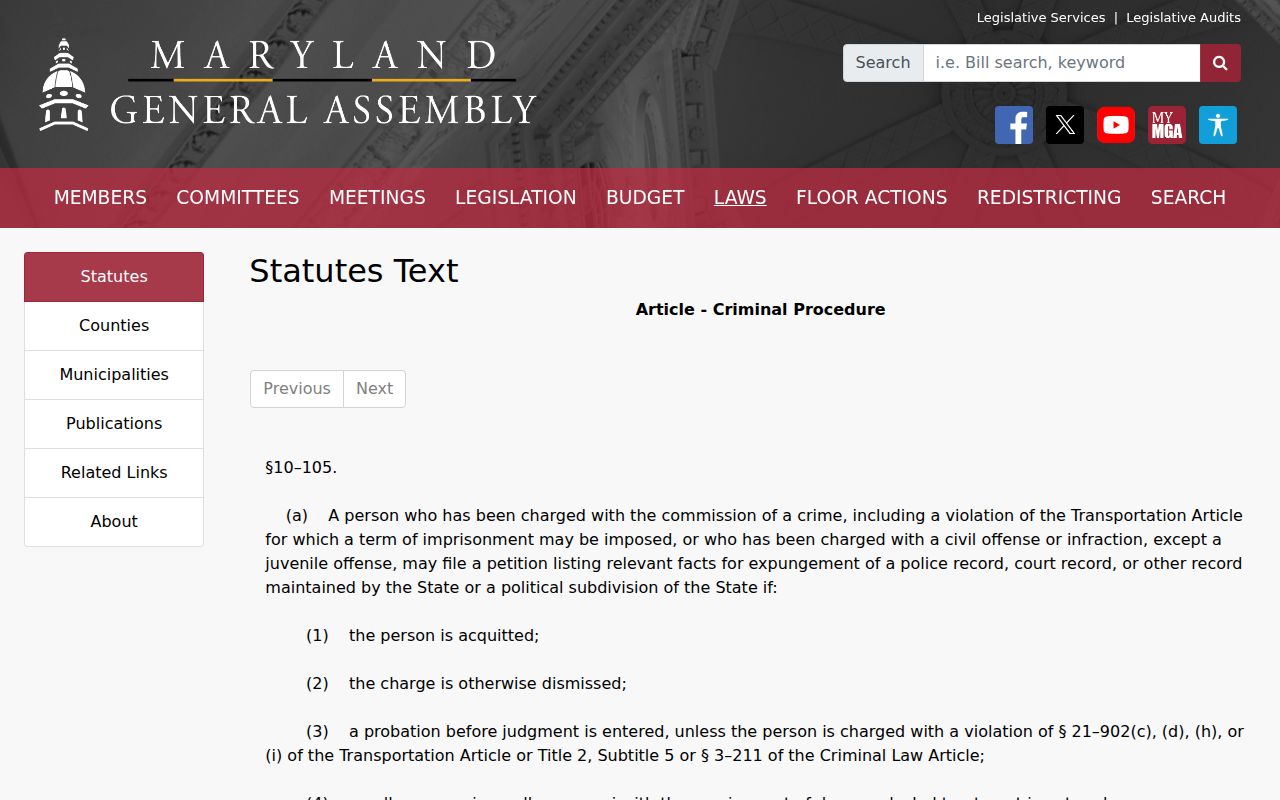
The statute affects later access but does not change the need to read each recorded count and disposition accurately.
Maryland Charges Versus Convictions
A charge is an accusation. A conviction is a guilty judgment after plea or adjudication. Maryland criminal court records can contain dismissed, acquitted, nolle prosequi, stet, PBJ, guilty, and merged outcomes in one case. Report the result of each count rather than labeling the whole file from the arrest or first charge.
| Charge | Conviction | |
|---|---|---|
| Stage | Accusation | Verdict or plea |
| Burden of Proof | Probable cause | Beyond reasonable doubt |
| Recorded Result | May remain pending or end favorably | Guilty outcome entered by the court |
| Remote Display | Some favorable or older stet results are omitted | Usually public unless restricted or cleaned up |
Reading Dispositions and Sentences
Guilty and not guilty state the adjudicated result. Dismissed ends the count as ordered. Nolle prosequi means the prosecutor declines further prosecution at that time. Stet places the matter on an inactive docket under conditions. PBJ stays entry of conviction and imposes probation; it should not be restated as a routine dismissal or conventional conviction. “Merged” often means the count was combined for sentencing rather than erased.
Read incarceration with its suspended portion, credit, and consecutive or concurrent terms. Then check probation, restitution, fines, costs, and later modification or violation entries. A sentence can change after appeal or revision. The signed sentencing order and certified docket are the sound sources for a formal statement.
Sealed vs. Expunged Records
Maryland shielding hides eligible Second Chance Act convictions from the public while law enforcement and authorized users retain access. It generally requires three years after completion of sentence and is limited to one granted petition in one chosen court and county. Expungement directs qualifying court and police records to be removed under statutory rules. Favorable petitions ordinarily have no fee; eligible guilty-disposition petitions cost $30 per case, with waiver requests available.
| Sealed | Expunged | |
|---|---|---|
| Visibility | Hidden from ordinary public access | Removed as Maryland law directs |
| Authorized Access | Law enforcement and specified users retain access | Later retrieval is difficult and narrowly controlled |
| Maryland Route | Second Chance petition for eligible convictions | Outcome-specific petition or qualifying automatic process |
The official Maryland record-cleanup resource separates expungement, criminal shielding, protective-order shielding, and other pathways.
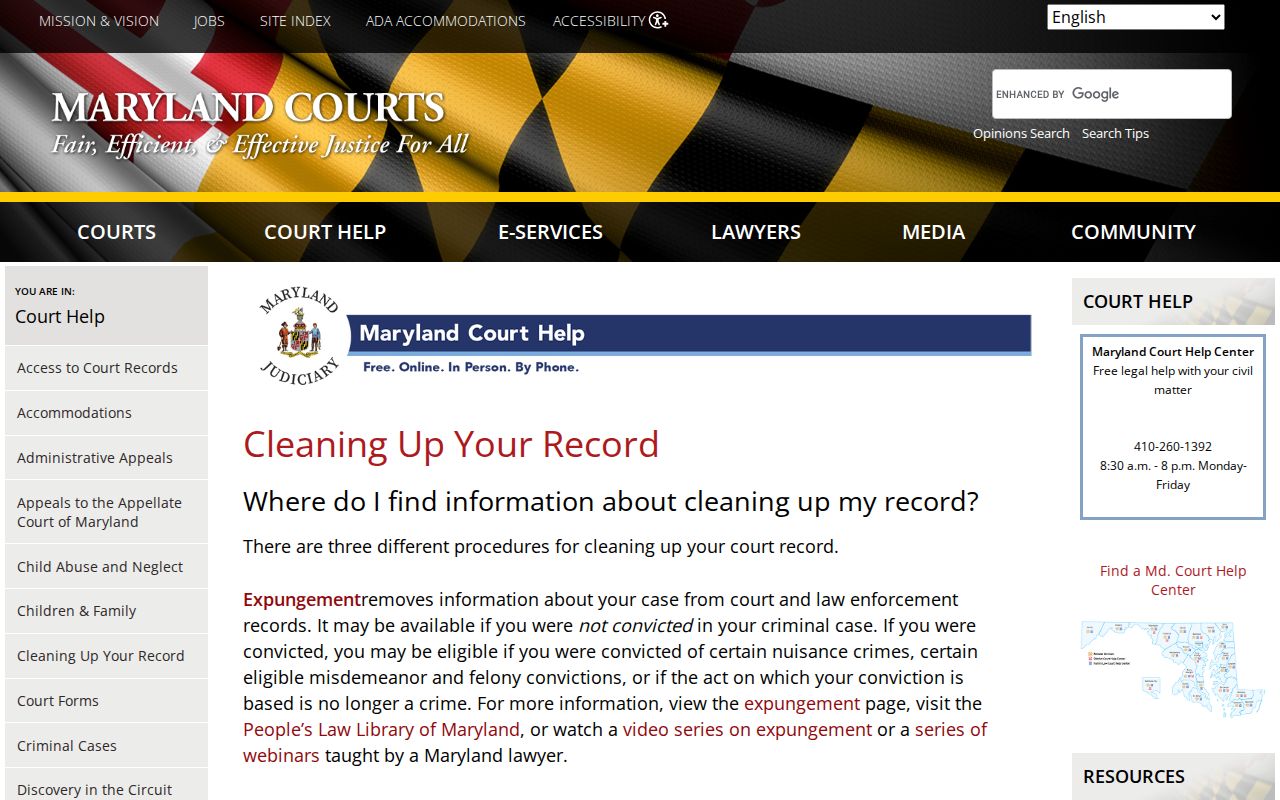
Choosing the correct process matters because remote omission alone is not proof of legal shielding or expungement.
Public Maryland Criminal Record Access
Maryland Rule 16-902 presumes judicial records open unless law, rule, case law, constitution, or court order restricts them. Rules 16-901 through 16-914 govern requests and remote versus courthouse access. The PIA governs many agency records but cannot override a judicial sealing order. Ask the filing clerk for nonrestricted docket entries and segregable portions when only one document or field is closed.
Key Statutes:
Maryland Rule 16-902 states the policy favoring access to judicial records.
Criminal Procedure §10-301 begins the Second Chance Act shielding provisions.
Background Check Considerations
Maryland’s DPSCS Criminal Justice Information System Central Repository, or CJIS-CR, is the fingerprint-linked statewide history source. It may compile arrests, charges, and reported outcomes from several jurisdictions, but it is not a public name-search site. A subject can request personal review. Employers and licensing bodies need a lawful purpose, authorization process, and identity data. Maryland CHRI access has an $18 regulatory fee, while fingerprint and provider components can raise the total.
Case Search expressly warns that it is not for individual background checks. A name match can identify the wrong person, and remote display can omit a public courthouse record. Formal consumer reports used for employment, housing, credit, or insurance also trigger FCRA and other duties. Source-file verification should use certified dispositions, while identity-linked statewide review should use the authorized CJIS route.
Important: A Maryland Case Search name match is not an identity-verified criminal history and should not substitute for an authorized CJIS check.
The manifest’s Second Chance Act source shows the statutory shielding framework.
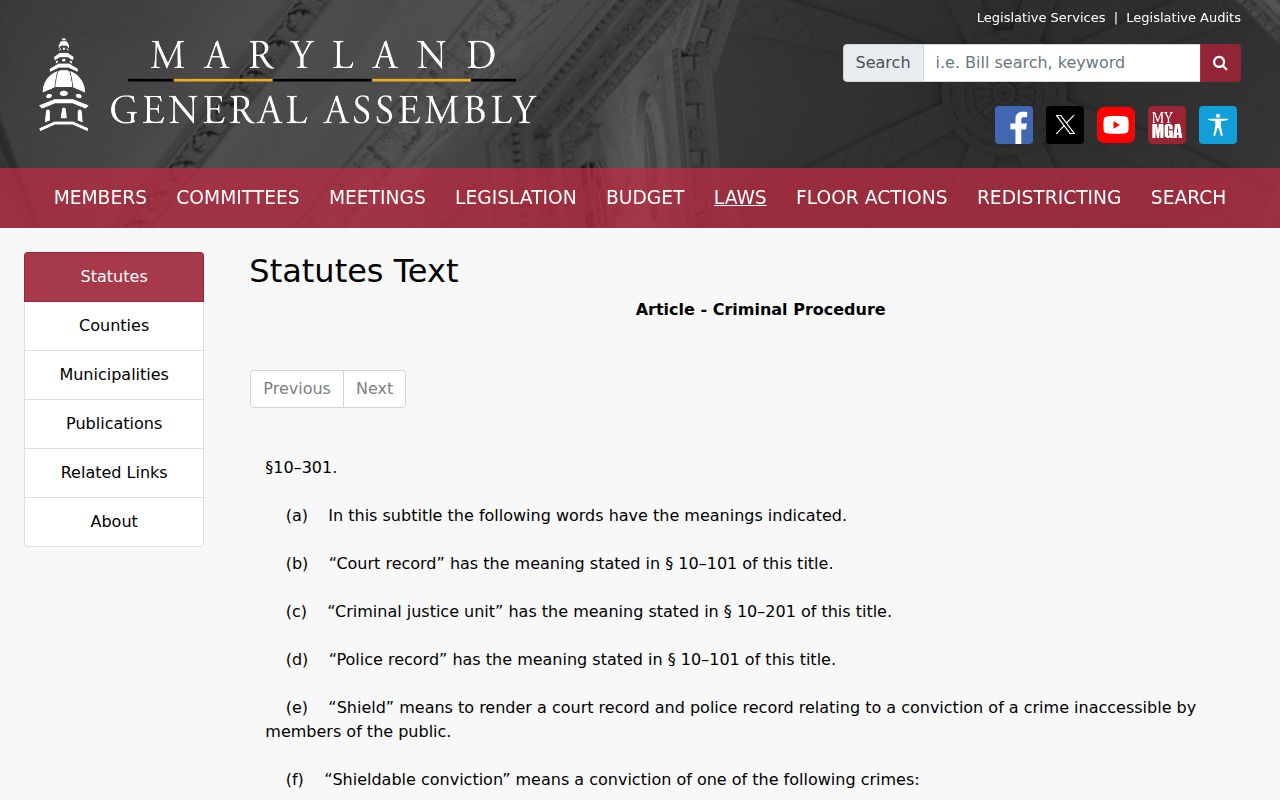
Shielding affects public access, but it does not turn the underlying Maryland record into an anonymous background-check product.
Restricted Maryland Criminal Records
Juvenile delinquency files are confidential. Sealed, shielded, and expunged matters follow their orders and statutes. Presentence reports, victim details, protected addresses, medical data, account numbers, Social Security numbers, and some investigatory material are withheld or redacted. Public charging papers also do not guarantee public discovery or prosecutor work product.
For a complete record, use Case Search to identify the court and number, then contact the clerk through the Maryland directory. Request the charging instrument, plea or verdict record, sentencing order, and certified disposition by name. If access is denied, ask for the rule, statute, or order and whether a redacted or segregable version can be released.
The official Maryland criminal shielding resource explains eligibility and forms.
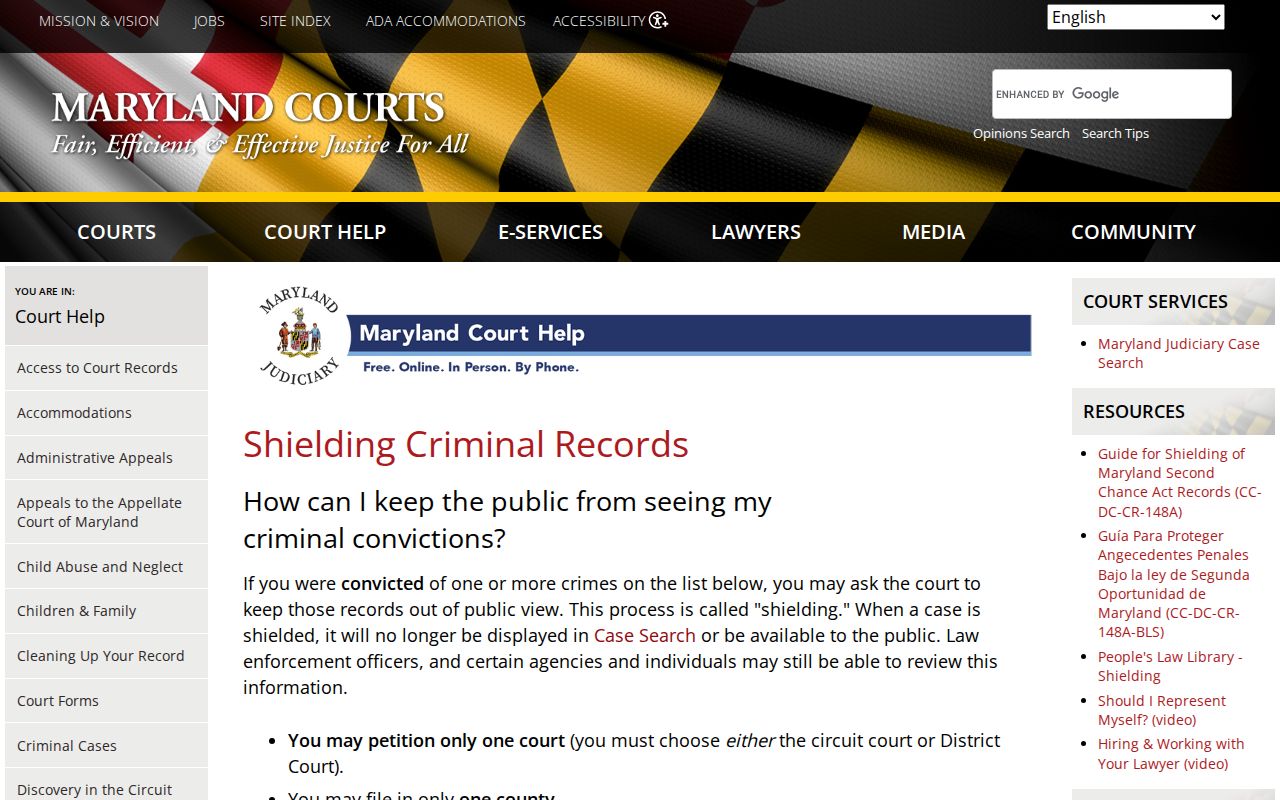
Only the filing court and authorized custodians can apply an order across the Maryland case record and linked repositories.
Accuracy work should collect three layers when each is relevant: the certified court disposition, a fingerprint-linked CJIS personal review, and an MVA driving record for motor-vehicle outcomes. Differences do not automatically prove misconduct. A clerk may have corrected a disposition that CJIS has not matched, or CJIS may hold an arrest submission without a final court result. MVA also has its own reporting cycle and administrative actions. Challenge each source through its own procedure and use certified court proof when asking another Maryland custodian to update an outcome.
Before seeking expungement, obtain the records that may later be needed. Immigration, licensing, and other proceedings can require proof after public access ends, and the legal effect of PBJ or another Maryland disposition can differ by context. Review every charge in the statutory unit because one ineligible count can affect the petition. Keep the petition, order, and compliance certificate securely. Remote removal can take processing time across custodians, while a stale private copy may remain outside the court’s direct control.